When I went to high school, the only shooting that mattered was on the basketball court. Gun violence on campus was not yet a phenomenon. Sure, there were many people with mental health issues, anger, grudges, and entitlement; but they didn’t act out violently with weapons at schools.
We had rough schools (although mine were not among them). New York was a tough place even then; street thugs abounded, and street and subway muggings were commonplace. Yet, schools were safe, at least physically.
As a dedicated athlete and player on my high school basketball team, I was preoccupied with shooting—the ball. Day in and out, the gym and schoolyards were my comfort zone. I practiced daily for hours with energy that now seems inscrutable. I was young, striving to be grown up, strong, confident, and independent.
It was a different world, as the cliché goes. Recently, I revisited that world by attending my fiftieth high school reunion. It was a hobbled walk down memory lane, a campus visit with a lot of exercise for my hippocampus—the brain part responsible and active in memory.
I grew up in the Bronx and attended the Bronx High School of Science, an elite and esteemed public school. I graduated in 1969. A lot of water under the bridge since then, as they say. We become legends in our own mirror.
Attending my fiftieth high school reunion was an emotional gamble, filled with ambivalence and uncertainty. What would it be like to “go there again?” Whom would I meet, what would I remember, how would it feel? Who would show up at the reunion? I anticipated seeing only a few friends and teammates. Preparing for this adventure confronted me with many holes in my memory. There’s an old hippie saying, “If you can remember the 1960’s, you probably weren’t there.” What I remember clearly through the haze is that I was an alienated adolescent, riddled with psychological malaise, hating my parents, and pretending to join the zeitgeist and endless self-indulgent peer party, while riding the coattails of political rebellion I cared nothing about. I was preoccupied with trying to be cool and popular, recognized for social and athletic achievements, and wanting to be a star—also overwhelmed with adjusting to my own changing body, emerging manhood, and the conflicting mixtures of appetites, constraints, and an intellectual but naïve understanding of the world.
The world at that time: Vietnam, Johnson, Nixon, Beatles, no cellphones, voicemail, or personal computers. No Google, just giggles about the secrets of sex, taboos, and the temptations and ambitions of growing up. Cars with roll-down windows and no air conditioning, rents of one hundred dollars per month, only five TV channels, and no Internet. Planets and galaxies not yet discovered and college tuition at around six hundred dollars per semester.
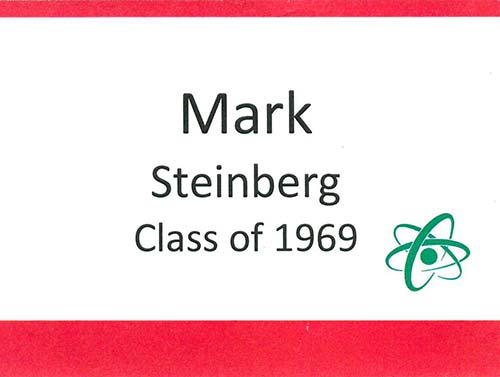
Arriving in New York for the reunion: no longer a scared adolescent riding the subways; years after a book tour for my first published book; not so interested in sightseeing, shopping, night life—been there, done that. Accompanied by my wife for a privileged peek into my origins. What would it look like through her eyes? At the reunion, she wore a nametag: Class of 1969. In reality, she was in first grade in 1969 in Communist Russia.
I suppose that part of the bond people share includes the commonalities of getting older, looking back, taking stock, and tendering the double-edged voyeurism of how your peers have done and how they’ve aged: different cultures, different schools, different journeys, and varied traumas. Along the way, hair thins and turns white, body parts complain and wear out, and most of us become tempered by some maturity and humility. Getting old sucks and hurts—but there is lots of company and the elder hobby of compassion and comparison: maybe you are not faring as badly as some… and, you are still living.
There was a reception and dinner, followed by a next day open house at the school. I met a handful of folks I knew, and a few I didn’t remember recognized me. Certain people I’d really hoped to see didn’t show up. Reconnecting with the few close ones who came was gratifying and heartening. There was an old girlfriend who didn’t remember (or acknowledge) our intimacy and another who reminded me of gifts I had given her. I listened with a stupefied smile to her recollection of my meaningful ardor toward her, of which I had no recall.
The whirlwind of perfunctory greetings and nametag inspections tested my memory and sense of belonging. Fellow classmates recounted stories about teachers and their idiosyncrasies. I’m embarrassed to admit that I can only remember the names of a few teachers and barely more of the subjects they taught.
The rendezvous challenged my self-perception of my keen mind and excellent memory. Of course, I know how selective memory can be, even in a healthy brain. But here was a plethora of evidence about myself and my history from which to reconstruct the convolutions of the past with the decaying effects of time.
The most striking experience I had at this reunion was a recurring and bizarre—almost out of body—sense that the peers with whom I was interacting were family friends and relatives, older and from a previous generation. Who were the white-haired, stooped, geriatric people? Aunts and uncles whom I didn’t recognize? Obsessively, I kept reminding myself that they are all my age. So why do they look like that? And the obvious self-confrontation, the elephant in the room: how do I look to them, and what are they thinking about me?
Yet, they are my peers. The sharpness of wit, the New York accents, the bluntness and disarmingly cozy communicative style. Lawyers, doctors, business magnates, grandparents, retirees. What have I done with my life? How do I compare? Do I expect not to be preoccupied with these vain and self-conscious mind games? What did I come here for?
Some of the ‘69ers looked very good; many others fit the template of what I conjectured, but couldn’t visualize until I beheld them, fifty years after their youthful pulchritude and resiliency had yielded to destiny. In general, the women looked less preserved than the men. I mentioned this to my wife, who concurred, never hinting that my view might be a tad misogynistic. A beauty my wife is, younger than this crowd, fighting her own aging battles, and united with me in the understanding that society and nature discriminate so harshly against females.
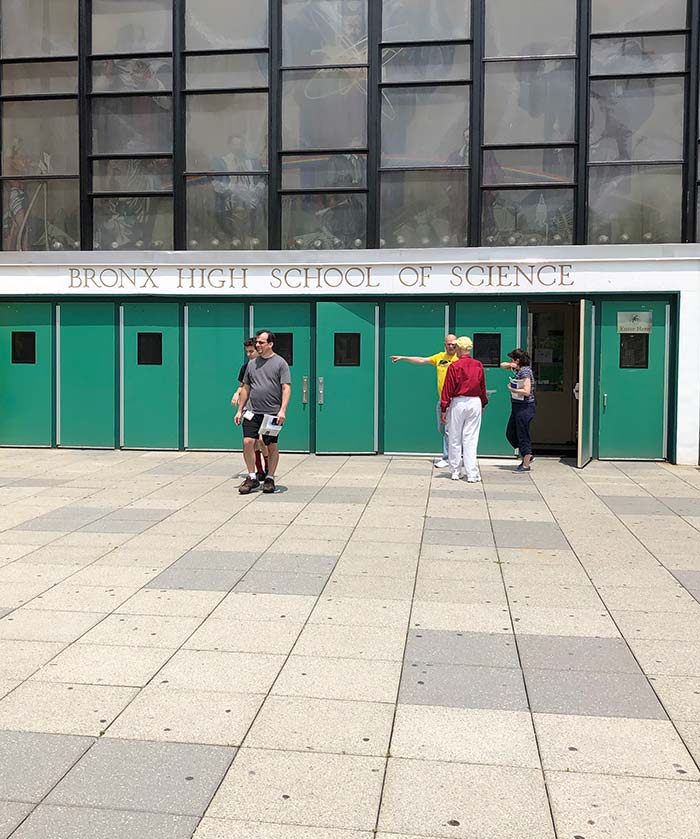
We went to the Bronx High School of Science campus for an open house on Sunday. At the north end of the Bronx hinterlands of New York City, the campus sits between DeWitt Clinton High School and Lehman College. The high school is separated from the other schools by sprawling athletic fields. Clinton High School teemed with six thousand students (males only), including the envious ones who did not make the admissions cut for Bronx Science. The Lehman College fields offered us respite from cutting classes and served as a partial hideout to the clandestine pot-smokers of the era.
We ogled the Bronx High School of Science Hall of Fame board by the school entrance: graduates who became famous scientists, well-known entertainers and politicos, people whose names inspired awe and sheepishness in me. We wandered around the corridors and classrooms, scoured the yearbook, and, of course, indulged my nostalgia in the gym. It turns out that some white men in their sixties can jump—at least for the fractional second it took my talented wife to snap a picture of me taking a jump shot in mid-air (well, off the floor, legitimately). Back home, I hope to persuade her to Photoshop that picture to augment my leap!
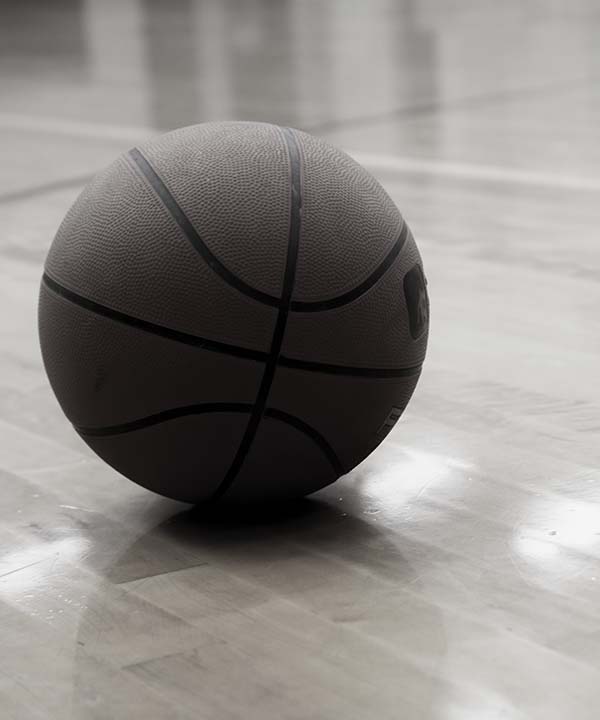
Standing in the gym was solemn. The court of my adolescence was a place of sweat and anguish. Imagine: striving to excel, steeped in the heat of competition, dreaming and wondering about the future. I could still visualize my Spartan coach screaming apoplectically at referee calls and player mistakes. We were a disciplined team, and we won most of the time. Glory days, in retrospect.
I peered into the auditorium, remembering the day that Martin Luther King was assassinated in 1968. My teammate Greg, a black student and leader among us, refused to stand for the Pledge of Allegiance. Physically distant, but emotionally visceral, violence pierced us vicariously. But the shooting that insulated us—that personally mattered—transpired down the hall in the gym.
The halls of Science sported posters and messages of 2019: announcements of transgender meetings, etc. Sitting in classroom chairs did not seem Lilliputian, but instead brought back memories of staring out the windows, a main pastime of mine as a student.
My reunion peers reminisced about idiosyncratic teachers and the effects that profound specific interactions had on them. One remembered an English teacher who praised him as an excellent writer; indeed he’s become a published author. Another remembered a science teacher’s emphasis on never stopping formal education until the completion of a doctorate. This individual is now a university science professor, a man of laudable accomplishments and patents.
I remember Mr. Kretschmer, my shop teacher; it was in his shop class that I struggled to build a Van der Graaf generator. My incompetence in this class verified my emerging self-knowledge that my abilities to work with my hands were extremely limited. Oh, how I eschewed hands-on learning! Give me abstractions, concepts, and the shining life of the mind!
In those days, high schools did not offer psychology classes. The intricacies of the mind developed in those preoccupied with their own hang-ups and given to read and/or see therapists. Psychoanalysis was (and is) a New York basic, as staple as pizza and bagels. I was such a student and patient.
Though my recollection of teachers and classes was spotty, I joined consensus with my classmates on one thing: certain teachers made an indelible and magnificent impression on our lives. The power of good modeling and caring upon on young people is to be taken seriously. We had a great education, unmarred by violence against us.
Everybody has developmental traumas. Growing up is harrowing, even for the fortunate. Many families carry dysfunction and abuse that seem like war zones to trapped children. Yet, we did not suffer the invasive violence that devastates the lives of so many students in this age. The shelter of protection has been ripped away in a modern world of exposure, craziness, and desperation. Shooting to take lives has eclipsed shooting to claim athletic victories.
Fifty years hence, more than half a lifetime later, the memories of adolescence are injected with new vitality. I am the same person whose picture is in the yearbook, whose shooting echoed in the gym along with the ghosts of many others. Yet, I am different in many ways—a projection and product of destiny, whose manifestations could only be glimmered decades ago. Though I crossed paths and interacted with old classmates, the reunion experience is most profound in the silent knowledge that my peers are processing in parallel their own growth and journeys.
In my basketball days, “shoot to kill” had a far different meaning: a metaphor for trouncing the opposing team. I had a friend who charmingly would yell “It’s Kaddish,” when a very skilled shooter launched his shot toward the basket, knowing it would almost certainly go in for points. Kaddish is a Jewish prayer for the dead.
The school shootings of yesteryear etched deep into the character of the person I’ve become. Those shooting episodes that occurred on the courts are different from the contemporary carnage that ends up in the courts. It’s a different world now. Waves of gun violence ravage and compound the already complex challenges of adolescence.
The wisdom and experience of my generation must prevail to help others reach and reflect upon their own half centuries and rites of passage through life.