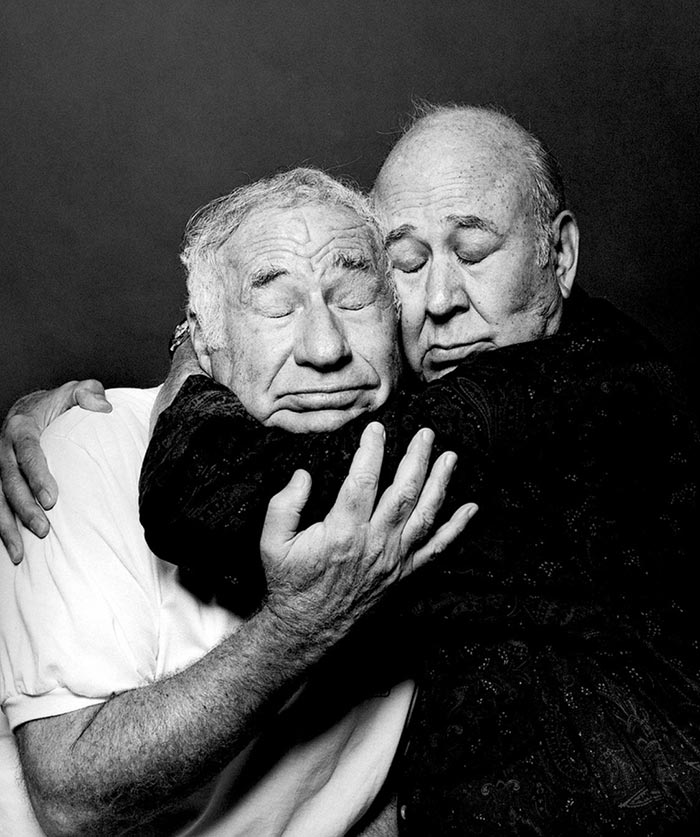
Comedian Jerry Seinfeld explains the four levels of success as a comedian.
The first level is finding out that you can make your family and friends laugh. The second level is making people other than your family and friends laugh. The third level is making people laugh for money. The fourth level of success is when people start imitating your voice.
As long as I can remember I’ve been a comedy fan. Today’s entertainment world offers an abundance of comics, many of them overly vulgar and not so funny. Standup comedy is a tough career and a hard road. Comics speak from their own pain, and it is often a lifestyle filled with depression, broken relationships, and substance abuse. Effective comedy has the quality and impact of enabling its audience to relate and identify with the humor, irony, tragedy, and difficulties in everyday life. It can be uplifting to consider the lighter side.
As a mature adult, I’m conflicted about my love of comedy. I relish the subtle plays on language, the brilliant insights, and double entendres. However, jokes are often put-downs, told at the expense of demeaning others. Much humor is misogynistic or racist. Clever as jokes might be, they invariably convey a belittling message about their subjects.
Good humor often pokes fun at the raconteur, portraying the comic as a foolish (if innocent) victim. The listener can laugh at the victim, but also see himself by reflective implication.
I tend to prefer Jewish humor and black humor. Both styles lambast me for my race and ethnicity; yet, I find them usually more funny than offensive. I have the luxury of enjoying laughing at myself. Jewish humor exposes my stereotyped weaknesses from an identified view, whereas black humor gives me a portal into black life otherwise unavailable to me, while also unmasking the pain of putting up with a white world.
Many people balk in offense at the vulgar and “racist” language that typifies black comedy. I grew up with this genre, and so I can partially look beyond its self-mocking vulgarity to appreciate the stark truths, ironies, and hysteria in the comedic material.
Seinfeld is uniquely brilliant in his comedy that does not make use of profanity. Still, the sarcastic put-downs that form the core of almost all comedy trouble me. In bringing up my children, I would discourage put-downs, sarcasm, and demeaning comments. I alerted my kids to the demeaning nature of TV shows and cartoons that make nasty fun of people. I’ve fought a lifelong battle against my own sarcasm (which I jokingly attribute to my New York upbringing), and maturity is yielding progress. I struggle to not be hypocritical. Inside my head, there are jokes that crop up, putting me in silent stitches. Yet, I feel ashamed of having these thoughts (which I no longer share with others) because they are “funny” at the expense of the integrity and worthiness of others. As I said, they are funny, but at the cost of those they denigrate.
I’ve had many discussions with my children, who mocked me for my “puritanism” when they were kids.
“Dad,” they would say derisively, “these people are not present to hear your jokes. They can’t be offended.”
“But,” I’d say, “I hear them. And, I somehow know that by reviewing and entertaining myself with this humor, I am putting down others. So, I don’t want to be that way.”
I still find many opportunities to poke fun, unearth ironies, and help others chuckle and take some things more lightly. As I point out to my patients after attempts at levity, “Now you know why I keep my day job.”
Long ago, in his candor, one of my sons revealed a stinging truth: “Dad, you are really, really funny! But, Uncle Lee makes people laugh.”
Ouch!
Until now, you think I’ve been talking about humor. So it seems, and I have—though, I’ve been setting you up, just like a comedian sets up the audience with a premise, concealing the punchline until they are engaged in the setup.
I’d really like to discuss influence: how people engage and influence others. The capacities and mechanisms of influence factor highly into the impact we have and the difference we make when others notice, value, and adopt our “take” on the world.
Using Seinfeld’s model of the four levels of comedic success, we can, in parallel, understand how you get the attention of others to influence, persuade, and get them to accept and perhaps promote your views.
The first level of influence is getting your family and friends to take you seriously. If you grew up in a supportive family where your needs were recognized and met and where your voice was heard, you are at great advantage. Perhaps you were nurtured, listened to and read to, taken interesting places, engaged in discussions, and treated like your opinions mattered. Such a background would likely give you a head start in confidence, security, and cognitive development.
On the other hand, maybe you—like so many—were discounted, treated insensitively, or even neglected or abused. If so, you got the message that you weren’t quite worthy or important, that your views were insignificant or irrelevant. This is a harsh blow to confidence and self-esteem, a battering to the willingness to take risks and be engaged and intimate. Born of the need to survive, children of those environments must find ways to get attention and be heard, hopefully in adaptive ways.
When divulging transparently, most comedians reveal how insecure, out of place, and isolated they felt as youngsters, citing that what led them to comedy was the need to process and overcome emotional pain. Discovering that they were funny became a way out of the isolating darkness.
The second level of influence is getting people other than your friends and family to take you seriously. This, of course, involves the natural and lengthy process of development, whereby you grow and mature, develop and acquire skills and competencies, and progressively track and understand what you have to offer that others value and even solicit. Each person must find currencies in behavior and personality that can be viably exchanged with others to meet needs and make impact.
Popularity, athletic or academic ability, friendliness, attractiveness (in various forms) are all currencies that individuals discover in their arsenal of tools to function in the world. As those with comic talents learn, each of us must find our best ways to procure attention and get others to regard us earnestly. It is very often the case that people emerge from their childhood traumas and anonymity by discovering that people outside the family take them more seriously than their parents and siblings. As the saying goes, “You are never a prophet in your home town.”
The third level of influence is getting people to pay you for your contribution. This is the domain of the work world. Serving food or stocking shelves may not be glamorous or have a wide audience, but a paycheck is verification of value contributed in the real world. As one progresses in career, seniority, specialization, and experience, increases in income and influence generally follow. We all need money and the things it buys. But, getting paid for what we do also validates our influence and pads our ego as well as bank account. Keeping a paid job is one indisputable verification of value and influence.
The fourth level of success, according to Seinfeld’s comedy hierarchy, is when people start imitating your voice. They tell your jokes, intone your voice, and fancifully intone for the moment the presence and influence of a familiar and well-received jokester. To be successful at this level, people have to know about you and recognize your particular charisma and cleverness. It’s an echelon that relatively few in the crowd achieve.
Though you are probably not in the comedy business, Seinfeld’s elite level is one you can strive to achieve. Imitating your voice is a metaphor that can be translated as your level of influence. If you are in a position of teaching others (not necessarily with the title or position of teacher), and they repeat or practice what you teach, they are imitating your voice. Naturally, parents are teachers. Hopefully, parents want to impress their children with their views and values. Much of this transmission happens subconsciously and automatically, as well as intentionally. Have you ever found yourself thinking, “Goodness, I sound just like my mother!?” Children will copy what you say and what you do, albeit often after years of delay following rebellion and rejection.
Perhaps you train or manage people at your job. When coworkers copy you, repeat, or implement what you instruct, they are honoring you and imitating your voice. We speak not only in puns or double entendres, but also with our behaviors and messages, our instructing and helping.
If you recommend a product, a diet, or a routine, you may positively influence those who watch and listen to you. Giving others the benefit of your wisdom or experience is an act of courage and a gift. You may get challenged or heckled. Being yourself and developing aplomb and confidence takes practice and courage.
Comedians use a vernacular to describe the effectiveness of their performances. When they say “I killed!,” it signifies a terrific performance, one in which the audience was in stitches over their act. Conversely, “I died out there!” means they had a miserable experience, a performance where the audience did not think they were funny. Rejection, though inevitable, is devastating.
In your efforts to influence others—to the point where they invoke you—there will be “killing” and “dying.” Through these experiences, with persistence and refinement, you will live on, and the legacy of your voice and influence can inspire others.
We are all under the influence of those who raised, taught, and served as models for us. Individuality is a wonderful combination of God-given uniqueness molded and refined by the experiences and people we encounter. Significant ones leave their marks upon us, and we imitate them subconsciously and consciously.
Keep refining your voice and seeking your influence. You are your own shtick, probably appreciated and repeated more than you realize. Be discreet and sensitive, but don’t hold back. The world is waiting to hear what you offer, laugh with (and sometimes at) you, and often follow your lead.
My mind archives thousands of jokes, collections of my experiences and the people and literature that have made lasting impressions. As present happenings unfold, I recall with nimble acuity the puns, stories, and one-liners—zingers—that evoke relaxation and peals of inner mirth. Many of these I dare not tell because they would be inappropriate, according to circumstances and my own values. So, I censor them and search for lines that will connect my audience with some humor, easing of tension, and the points I wish to reinforce.
I tell people that the first time they tell one of my jokes, they’re borrowing it; the second time, they’re stealing it; the third time, it’s their own.
I try to be funny and to occupy my busy mind with creative outlets. Maybe someday, I can even make people laugh. For now, I keep my day job and influence people positively in the best ways I know how. I can’t count how many times I’ve repeated the line from an old friend:
“Unemployable Jewish comedians make great teachers, salesmen, and psychologists.”
— Mark Steinberg, PhD