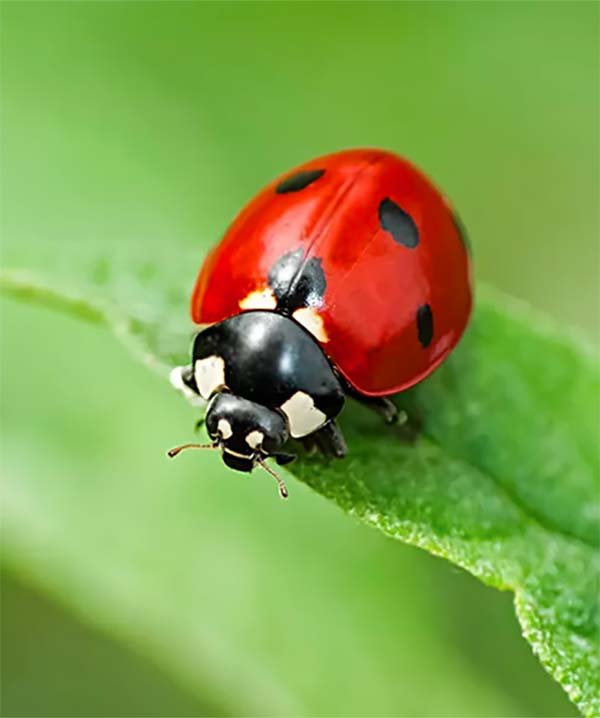
In the tech world, a known entity in the development and operation of software detracts from smooth, fault-free usage—a fly in the ointment so to speak. Such design errors, flaws, or glitches that produce an unintended or incorrect result are called “bugs.”
Programming imperfections are common and fully expected throughout the stages of software development, which include extensive quality control reviews and test (beta) versions of new prototypes or updates. Though engineers eliminate the most egregious and critical glitches in a process known as debugging, bugs that are nonfatal, noncritical, and don’t stop a program from running are not necessarily fixed. Still infected by various “inconvenient” bugs, the products are launched anyway, and consumers are left to report feedback than can sometimes include thousands of small “bugs.” So far, it has not been feasible to put out a bug-free program.
“It’s not a bug, it’s a feature” is an inside joke in the engineering community, referring to when programmers document a known-to-be inconvenient “quirk” in the user manual, relegating a “bug” to the status of a “feature.” That is to say, “This is the way it’s supposed to work (so get over your displeasure).”
I’m not a computer programmer. I do however work with people in the development and refinement of their brain software to help them function better and have more fulfilling lives. Human dissatisfaction and frustration with things not working the way we want or expect them to is legion. The distinction between working according to plan and deviating from such operation depends on what and whose plan is sourced. Thus, whether something is a bug or feature in life is important and ubiquitous in how we encounter and engage with our world.
I find the concept of feature vs. bug to be a very relevant model and discriminator regarding attitude, worldview, and the mindset underlying one’s approach to the adversity, setbacks, and complications in life. I use an acronym to refer to this distinction: RAFNAB—rather a feature, not a bug.
Using the example of computer software, the main difference between a feature and a bug is that a bug is accidental, and a feature is intentional. In my view, this jargon and template has great utility in approaching larger life situations and challenges. Of course, life has accidents, mistakes, mishaps. Errors, twists, and deviations abound. This reality notwithstanding, when things don’t go our way, or when expectations are defeated, we are prone to see them as bugs—departures from the way things should go, flaws in the fulfillment of our design and expectations.
I suggest an alternative way of interpreting deviations from our plans and expectations, a context that lends flexibility, better adaptation, and more functionally realistic engagement with the inevitable and abundant imperfections and frustrations we experience. When things go awry or unpleasantly, why not try seeing them as features, rather than bugs?
By viewing such circumstances and developments as built-in operations, programmed and intended in how life unfolds, we can avert much frustration, isolation, and war against the universe. The Complaint Department is besieged and will likely be unresponsive. Most of us spend far too much time grousing about inconveniences, frustrations, other people’s behavior, grudges, and resentments, and reaffirming our opinions and justifications about feeling wronged when things don’t go our way.
This habit puts us at cross purposes with the world and nature, and sours our reactions to and relations with ourselves (bodies, health, emotions, idiosyncracies).
Adopting the feature vs. bug model helps avert tendencies to battle nature and reality. One’s point of view has profound influences on interpretation, patience, flexibility, and practicality. This adaptability has vast application to acceptance and problem-solving, but has little to do with a positive outlook. On the contrary, when we expect things to go wrong, we are better prepared to take setbacks in stride and mount effective responses to absorb or counter them.
Lest this sound like a clichéd replay, urging a positive attitude over negative thinking and gloomy forecasting, let me clarify. Through experience, our surprise wanes when things go south. Though we may have negative feelings or impulsive reactions, memory and conditioning prepare us to recognize the familiar “here we go again” reaction, as well as assimilate new wrinkles and challenges.
Encountering problems with the half-comic, half-tragic acknowledgment of a feature (instead of a bug) can bring inner peace and security, because this view acknowledges that frustrating wrinkles are actually part of the plan. This helps summon resources to deal with the problems. Expecting that things will go wrong or devolve comes more from past experience and evidence than from negative fantasies or gloomy attitudes. We project, predict, and prepare using what we have learned. This is a vital combination of the instinct and learning needed for surviving and thriving.
On the spectrum of expectations and predictions, some may exceed in forecasting the worst. Others react with naïve surprise or flummox at downturns, despite their likelihood; but this does not invalidate the consensus that life is full of ups and downs, often elusive and seemingly unfair. Their occurrences are largely consonant with our pattern of experiences.
We naturally think of hardship as “bad,” and pleasantries and fortune as “good.” This is our nature, as it should be. Thus bugs are bad occurrences—never should have happened, how dare they intrude, we must obliterate them, and features are good—the way things should go and life should be, as we see and want it.
However, that prominent human tendency is at odds with reality. Each of us is a small (and preciously important) cog in a very complicated and only partially decipherable universe. We need to overcome our self-imposed prominence in practical ways. We need to get over ourselves!
Let’s step through some areas of challenge and see how interpretations of bugs and features can shed light on problems and suggest how to respond to them.
Unintended, unforeseen, or undesired consequences arise from nature and from human actions. Some are independent, but most are convoluted interactions between us and nature, featuring our fervent pride and desire to dominate and control versus nature’s sovereignty and eventual victory. Sometimes it’s a fun game, and often it’s downright threatening.
An apt example for evaluating intention, control, and undesirable consequences is the development of artificial intelligence (AI) and the challenges and responsibilities of containing it to prevent dangerous outcomes. This hot topic centers on the unfolding discovery that the efficiency of machine learning introduces the phenomena of deep fakes and false realities that can cause harm and perhaps even threaten our collective ability to control the influences of computers. We already see drastic and invasive ramifications of digital technology in cyber attacks, identity theft, and proliferating scams.
We automatically think of these undesirable consequences as bugs. After all, they cause harms that were not the intentions of the original geniuses who developed the technology. Despite the antipathy of law-abiding citizens and governments, the open door to malware and scams is a feature of technology. It’s built into the capabilities, like spores awaiting favorable conditions to emerge and flourish. So then, whose responsibility is it to fix the “bugs?”
We might assume that this falls under the purview of programmers and engineers since they have the technical skills required. But putting the genie back in the box is more complicated, typically involving authorities, regulators, public awareness, and self-protection. The bug/feature issue has wider ramifications.
Another “hot” topic is climate change. Few would deny the presence and bearing of climate change. Current scientific consensus documents its impact and the likely influences of human activity on our planet’s degradation. Those who resist the acknowledgment of or responsibility for climate change resort to explanations of nature’s outstripping of man’s influences and nature’s innate and provident capacity to correct itself over time. Others, activists sounding alarms and those who don’t have eons to wait for nature, think that imminent and sweeping action in required to turn the tide.
But what is to be done about slowing and reversing climate change, and who should do what about it?
Surely no one welcomes natural disasters, polluted air, or dying species! Are climate changes really bugs, attributable to man’s myopic interference or to nature’s intrinsic errors? Perhaps they are more realistically features. Given the delicate ecosystems on earth, should we be surprised that man’s intrepid forays and inventions interfere with nature’s balance and cause devastating consequences?
Bugs or features, the debate will continue. But how should we respond?
Moreover, if we must shoulder the burden of fixing or eliminating bugs large and small, to what extent are we capable of doing so?
Let’s focus our lens on more pedestrian concerns. Considering whether we regard common obstacles and occurrences as bugs or features will more easily inform our attitudes and responses. Consider the following areas of life that arise for everyone, reflecting whether they may be seen as features, natural components of things that bug us.
Strong desires that remain frustrated result in conflicts. Competition is a part of the animal kingdom, despite much aversion or efforts to minimize it. Conflicts usually cause stress, sometimes cause aggression or avoidance, and can result in quarrels and fractured relationships. Jealousy and envy arising from a thwarted sense of justice in which the individual feels unfairly judged or deprived (things have unfairly been withheld or taken away in favor of someone else) stoke inner fires of possessiveness, fear, and emptiness. The tendency to blame feeds the fires.
Appetites that are never fully satisfied can translate into trying to squeeze happiness and contentment out of others.
Among the many areas that cause disturbance and conflict in relationships are:
Many conflicts can be resolved, but many cannot. Conflicts may or may not be adversarial, but they are always oppositional. They involve the frustration of a desire, and this characteristic is salient. Conflict is that frustration of desire or a disagreement that entails opposition or competition.
Some people are temperamentally prone to avoid disagreements and battles. They conclude on the basis of experience that engaging in any conflict is a lose-lose proposition. These people tend to be more passive and less assertive and aggressive.
Others are prone to engage in or even welcome conflict, either because the heightened stimulation rewards them or because they see the conflict as resolvable, and thus finding solutions to controversies becomes a challenge and a goal. These people tend to be assertive and confrontational.
In managing conflict, something is more important than whether you are passive or active, avoidant or confrontational. In fact, to get a handle on the phenomenon of conflict, we must differentiate confrontation from conflict. A confrontation is an interactive encounter between opposing forces or points of view. A confrontation may or may not be hostile, but it involves disagreement. This could precipitate reaching a critical decision point, which might generate a chain reaction that magnifies the confrontation and produces dire consequences. For example, someone who takes your belongings, threatens you, or inconveniences you may trigger a confrontation. In contrast, a conflict may exist without necessarily being confronted or exposed.
As many conflicts are internal, repression or denial may cloud the underlying issues. Certainly, most of us have internal conflicts that pit opposing desires against each other (e.g., “I want to tell him what I’m thinking, but I don’t want to hurt his feelings or get into an argument.” “I know I should spend more quality time with my kids, but I want to get a promotion and earn more money, and this requires more time at work.”).
As uncomfortable as conflict often is, it’s endemic to how people interact in efforts to survive. When people have differences and compete for resources or standing, there’s bound to be some conflict. Thus, it’s a feature of human affairs.
Accepting that all kinds of adversity will arrive is a function of experience, maturity, and the deployment of humility to replace any sense of entitlement. Why be miffed or surprised when things don’t go your way?
Perhaps you’ve heard the saying, “Whatever doesn’t kill me makes me stronger.” A bit extreme, but it makes the point that adversity helps us develop perseverance, grit, self-reliance and confidence, and tolerance of frustration (and others).
Adversity is only a bug to those who think life owes them.
Of course, life is dangerous. Humans in civilization may not be subject to being eaten, but nature can be quite cruel, with many human predators. One must be cautious, but not to the point where it rules one’s inner being.
In college, I had a great professor who wrote a song he called “Rapanoia.” In his view, while paranoia is being afraid of things without real cause to fear, rapanoia is being unafraid or unaware of what really is out there that is a threat.
Danger and fear are very much realistic. They are only bugs when they extend beyond actual threat. Even then they are features of our nervous systems that can be provoked or traumatized, but they can also be calmed and healed.
We are finite, and time wears us down. Confronting the aging process and eventual mortality, we somehow resist and resent the encroachment of time upon our bodies. The natural deterioration and accompanying limitations are seminal features of being human. Nonetheless, aging bugs us, afflicts discomforts and changes, and is hard to accept.
A beloved and respected mentor of mine (now deceased) described his later years as “the crud years.” He was not a negative person, but as he aged, he suffered the intrusions and detriments that brought pain and often sorrow. I have not yet entered “the crud years,” but my chronic pain has become a way of life, I have health issues to deal with, and my body cannot do what it used to.
A Spanish expression often used as a response to “How are you?” is Para Viejo (getting older).
A French counterpart: Si jeunesse savait, si vieillesse pouvait! (If youth only knew, if age only could!)
We get old (if we’re lucky). We die.
C’ést la vie! (That’s life!)
I love the expression, “Fatigue makes cowards of us all.” Not that I embrace fatigue or cowardice, but it’s true that we wear down and wear out. Nature has built into us the need and ability to rest and replenish. We must sleep, and we can recover and renew.
In my struggle to assert (and hopefully subdue) my will and sovereignty, becoming tired is a constant affront to illusions of grandeur or invincibility. High on the list of qualities I admire about God is that our Creator never gets tired! But God put this feature in us as well.
Okay, this is where real bugs are! Yet these too are part of nature’s program. We have to coexist with the many species of life. Some of them live off of us and make us sick. Awful as it is, this is endemic to our biology. But the design also features healing, immunology, and resilience to help us ward off the bugs.
Mortality features steps, invasions, microbes, infections, and reminders.
The advertisements, pop-ups, redirections, and suggestions (You might like this . . . other customers have also purchased . . .) that programmers insert can be a real annoyance. Also done deliberately are the content selection algorithms (especially on social media) that filter and choose what content shows up according to what will persuade, sell, or hook viewers into specific content exposure.
We now know these practices contribute to “scrolling addiction” and probably to many other destructive behaviors, including self-harm, prejudice, and violence. These intentional (and often hidden or denied) features are a growing problem, resulting directly from the powerful reach of digital technology.
In the hope and fantasy of a carefree existence, we somehow think that despair and negative emotions should be avoidable. Despite the surfeit of anxiety, depression, trauma, and despair that afflicts so many, tragedy spares very few. We are vulnerable beings by design. Fortunately, we are also made available to be blessed by hope, faith, forgiveness, healing, and salvation.
Acting in our own self-interest easily blends into too much acting in our own self-interest. The nature of the beast—in our case, beasts with highly developed abilities—is to plan, manipulate, organize, collude, and scheme. We are sensitive to the selfishness of others, often citing or criticizing them, while ironically blind to our own tendencies. Naturally we are offended when our toes are stepped on or our needs ignored. Narcissists exemplify extreme selfishness. Such self-absorption and callousness is perverted. Perhaps it is a bug (though not to them).
Selfishness, however, is a feature necessary for survival that must be tempered and balanced by other, more benevolent features, like love, empathy, virtue, and community sacrifice. If selfishness bugs you, it’s probably because you have the virtuous features that recognize and know the need to counteract it.
All of us crave and lean toward security. We are motivated to get and to get more (just in case). All too often, getting can get out of hand. Longing, acquisitiveness, avarice, and motivation to possess form the double-edged sword of providing versus hoarding and taking advantage.
Greed is a featured vice of our fallen nature. It may become a bug if unrestrained, uncontrolled, or not offset by generosity, altruism, virtue, and love. Like malware and scams, greed is the logical outcome of capability, opportunity, and control as features of our species.
Throughout history, man has tried to dominate and control others: individuals, populations, kingdoms. We try to get our way, accumulate property and riches, annex people and cultures, and use force to achieve our goals. In this way, we are predators, often shedding blood from a distance. We hold in captivity, in different forms, those we can subjugate to our will.
The truth of this ugliness does not justify, but simply documents it. Greed, fear, insecurity, and perhaps lack of self-control or contentment may all play roles in this very human feature.
No matter how easygoing some of us may be, certain people have a way of getting under our skin. Chances are that if someone regularly annoys you, then they have that effect on others too. Personalities and needs often clash, and individuals can vent their frustrations and dissatisfactions toward others who are not the cause. Some people are just curmudgeonly, foisting their crankiness or irascibility outward. Misanthropes and insensitive folks will eventually come your way. Are they bad apples? Few would think of themselves that way. Indeed to them, you are the problem!
Let’s also acknowledge the “elephant in the room.” In families, close and loving relationships, and among people who must live and work together, it’s common for someone’s quirks or habits to become irritating. Peculiarities that may be endearing at the beginning of relationships can morph into exasperating features of the person you are trying to tolerate.
Should we expect that not to occur? If only everyone could be more like (or just like) me/you!
Alas, it is the providence of nature and maturity that we are likely to thicken as we age, our metabolism slows, we generally need less food, and we easily gain weight.
Add to this the ubiquity of fast and available calorie-dense foods, and our genetic proclivity to eat and store calories, and the result is that keeping weight down is a challenge. Weight gain is a feature of our biology—the natural consequence of the aforementioned factors. Darn it!
As our bodies progress through the maturation and aging processes, we need to make adjustments in lifestyle, diet, and habits. Appropriate modifications, new habits, and medical knowledge and interventions can help tremendously in keeping this biologically vexing feature at bay.
Nobody likes rebellion except for those oppressed. Yet rebelliousness is as fundamental to human nature as breathing. That doesn’t mean that everyone is a rebel or upstart. It means that inherently we all want freedom. We also want to be “in charge.” In some, this turns into resistance or rebellious acts.
Call it the fallibility to sin. Blame it on Adam and Eve or Satan. Couch it in the context of good and evil. And it depends whose side you are on.
Humans want to have our way. We don’t like to be told what to do. Many take action to break free and assert independence, In our hearts, we all do. Evolution evidently includes some revolution.
Authorities are quick to suppress rebellion, citing “those people, that inciting minority” as the egregious culprits. But rebellion is also in the actions and minds of those in charge. Most of them just forgot.
The topics above are some examples of naturally occurring life issues that tempt us to see them as bugs: deviations or mistakes in our conception of errorless, smooth-sailing operations. They are more realistically built in to the fabric and design of the natural world and human activity and fallibility. They are imperfections; but features are not perfect. They are characteristics and attributes in a makeup.
Features and bugs compel us to struggle with nature in the physical and energetic world and with our own nature. Rather than positivity, it’s a matter of reality. Viewing problems and obstacles as opportunities and challenges is empowering.
Regarding the large and significant problems cited earlier (climate change, AI), I am not smart enough or capable enough to solve these, despite my invested interests. Following the path and refining the gifts I have to contribute, I devote my attention and efforts to the domains of working with human nature to downplay our inherent problematic features and debug what we, as fallible people, introduce.
I am preoccupied with teaching and modeling how to cope with an uncooperative universe, to live life as it is, rather than what we want it to be. My overriding concern is dealing with reality in adaptive, productive ways with compassion, understanding, and forgiveness. I place high value and trust in learning to accept and adjust when things don’t go my way, when the order of the world departs from my concepts and plans.
Using the feature vs. bug model to move forward in an imperfect world allows me to modify subjectivity and to consider my emotions and ego in their places, but not be ruled by them.
Humility is not a bug that inhibits achievement or happiness. Rather, it is a desirable feature that I need to learn how to program better. A certain amount of control is necessary. But arrogance is far too much work that always must be done alone.
I am responsible for cleaning up my own infestations. The bugs that are put in my way may indeed be features that are workable after all.
Here are some guidelines:
As we’ve all noticed, adversity is unavoidable and frequent. Don’t be surprised or caught off guard. Yet anticipating adversity does not require constant vigilance. You can relax and await the future with confidence and equanimity. Accepting that things will go wrong, that things are wrong (independent of what pleases or works for you) is part of life’s pattern. This is not pessimism—it’s a feature of an imperfect world.
You are capable of prevailing, catching up, overcoming, growing more, and adjusting. Count on resilience to aid you.
Steady as she goes is the old maritime expression. We take it to advise staying on course, having a plan, and following it, despite influences that may deter or steer otherwise. To do so, we need stability, levelheadedness, and the ability to rebound to calm composure. Sometimes we need a Plan B or a workaround to accommodate the apparent bugs. If your personal “operating system” is reliable and stable, the parts that don’t work will usually not interfere with getting to the desired outcome.
The habit of persevering is crucial to overcoming obstacles, quagmires, and unforeseen circumstances. Though planning, maintaining order, and assuming control are necessary, much of life is unpredictable. Even routines are routinely disrupted. Things break and need to be repaired or replaced. People leave, or they can’t or won’t help.
This is to be expected and accommodated. Keep on keeping on.
Of all the attributes helpful to overcoming and flourishing, flexibility in mind and internal resources is paramount. Staying the course gets to the goal; but changing course when appropriate is a vital component and measure of adaptation. Flexibility must inhabit our repertoires.
A big part of success is keeping focused on the desired end result. This perspective is motivating as well as corrective. Details and small steps are necessary and important, but never lose sight of the big picture. Focusing on the desired result will draw you to it. In this context, interferences are incidental.
When I first heard the saying, “Ride the horse in the direction it’s going,” it bothered me, probably because I was more prone to battling life and expecting hardship, perhaps creating more than was already there. Riding the horse, going with the flow, was not natural for me.
As maturity and experience seasoned and taught me, I became more able to expect and accept adversity and detours, flaws in others and myself, and to ride out the jostles and storms without too much complaining.
I want my life to reflect deep and abiding appreciation, with the ability and practice of savoring the many wonderful features of being alive and being myself amidst a sea of threat, disorder, and weaknesses. My commitment is to enjoy life with zest, tolerance, and constant gratitude.
Naysayers, critics, doubters, and others will try to tear us down. One’s attitudinal response and ability to forgive, shrug it off, let go, and move on are indispensable. The offenders will recede, lose interest, and ultimately become less influential or disruptive. Become bigger than they are, and don’t let them control.
In the matrix of features and deficiencies that pervade our days and endeavors, striving to see things—even unfavorable things—as intrinsic to designs that contain imperfections helps to substantially sustain our perspective, attitude, vision, and will to engage and persevere. We are less entitled, barely privileged, and blessedly fortunate to attain any rewards and accomplishments in this difficult and confusing world.
Some of our expectations and plans are fulfilled, while many are not. Life is not out to get us—although eventually it will.
When we purchase software or products dependent upon them, we expect the manufacturer to fix any bugs and provide us with features that are easy to use and friendly. With life challenges, who is responsible for the bugs? How realistic (or entitled) are we to what we take for granted as features?
By the way, if you want to read the manual, I recommend the New International Version (NIV) of the Bible. It thoroughly documents user bugs and divine features. If you find it confusing, cry out for tech support.
My poem reminds me to keep my tendency to want it “my way” in check.
This could be a bug or feature,
Problem aspect or a creature.
Someone please fix what’s wrong,
It’s in the way it takes too long.
Not the way it’s supposed to be,
Twists and turns it frustrates me.
Life should follow what I think,
When it doesn’t I make a stink.
Others, too, may feel this way
And they’re entitled to a say.
If things would follow my design,
All that matters would be fine.
God and nature beg to differ,
With my ideas they disagree.
Consider this rebellious mind
Is something that they put in me
Miffed by things I don’t intend,
To my will life will not bend
What to do about a bug,
Be flexible and give a shrug.
Capitulate and then adapt,
Otherwise my drive will sap.
I’ll be alone and always fight
If I insist my way is right.
What goes awry must be mistakes,
Errors man or nature makes
Is this a bug or just a feature?
Attitude is quite the teacher.
Envisioned outcomes I expect
Without the flaws I do detect.
Results are often less than neat,
Adjustment doesn’t mean defeat
Less than perfect is okay.
Most times things turn out that way.
Bugs or features by design,
Choosing context becomes mine.
— Mark Steinberg, PhD