As a licensed psychologist specializing in clinical, educational, and neuropsychology, I have practiced for over forty years. For the last thirty years, a large part of my practice has revolved around treating patients with EEG neurofeedback.
Because I am a doctor and mental health professional on the front lines of patient care, it’s expected of me to relieve patient symptoms successfully and reasonably quickly. This is my mission and duty. EEG neurofeedback is a versatile and effective method in providing such relief in a high percentage of cases, across a wide range of ages, and addressing a variety of complaints, symptoms, conditions, and disorders.
My patient population ranges from young children to the elderly. Among the conditions I treat are: focus, sleep, anxiety, depression, trauma, panic, fears and worry, obsessive compulsiveness, headaches, seizures, behavior disorders, motivation and apathy, anger, impulse control, addictions, learning disabilities, autism and developmental disorders, movement disorders, psychosis, schizophrenia, eating disorders, and others.
This list (though not exhaustive) beckons credibility in its diversity. To understand how neurofeedback can effectively address such a range of problems, one must appreciate the brain’s natural ability to adapt and re-regulate its own internal balance and housekeeping mechanisms. When shown in real time its own neural networking activity (the active mechanism in neurofeedback training), brains of all types and health are quite able to improve functionality.
For over three decades, I’ve treated thousands of patients. Most of them come to neurofeedback after other methods have failed them. Therefore, it’s fair to say that my patient population would be considered the more challenging ones. Nonetheless, I can conservatively report a success rate of at least eighty-five percent (a figure replicated by my colleagues around the world who practice state-of-the-art neurofeedback).
Success does not mean that I cure diseases or eliminate developmental disorders. And I make no claims to saving people from the variety of misfortunes, traumas, and persistent poor choices and trouble that may chronically dapple their histories and behavior patterns. What I do reliably help with and accomplish is the significant reduction (and often elimination) of distressing and impairing symptoms that compromise health, well-being, self-control, functionality, relationships, and productivity. After neurofeedback training, the vast majority of patients sleep better, focus better, and are minimally impeded by mood problems, extreme maladaptive behaviors, and feelings and acts that bespeak of impaired self-control.
My definition of success in treatment is the following:
Although neurofeedback has gained increasing popularity over several decades, its acceptance has been gradual and met with much resistance. Because the mainstream medical community largely ignores it, health insurers use this as a justification to deny coverage as “investigational.” This collusion between physicians and insurers continues despite half a century of solid research of the efficacy of neurofeedback—historically for seizures, headaches, and head injury, and more recently for a swath of “brain-controlled” conditions such as anxiety, depression, sleep, and many others. The common denominator that makes neurofeedback diversely effective is that it addresses self-regulation: the brain’s inherent capacity to re-regulate, reorganize, and balance neurological functioning when it is repeatedly shown (through training) its own neuronal internal affairs.
Its solid science notwithstanding, the process of neurofeedback and the mechanisms by which it improves brain functioning are counterintuitive and run parallel to the deductive logic by which most people comprehend and figure things out. Of course, we need logic, planning, accurate perception and analysis to make our way through daily life. The brain, however, also integrates and operates upon nonlinear processing, much of which governs primitive emotions, central nervous system stability, fight-or-flight responses that combine with executive function and logic to assimilate and accommodate experiences, internally generated and externally received. The cognitive abilities required for solving many problems, navigating through activities and ambiguities are different from the processes that allow for mood regulation, motivational sustenance, passion and compassion. No wonder, then, that the uninitiated are skeptical that watching games or videos while attached to electrodes can do anything useful to address the myriad of overwhelming symptoms that plague millions.
Surely, mental health practitioners administering neurofeedback do not generate the gravitas accorded to the minions researching and treating life-threatening diseases: cancer, heart disease, etc. Yet, it is noteworthy and sobering to reflect upon the reality that the vast majority of people—yes, majority—suffer from symptoms and conditions that chip away at health and well-being and nickel-and-dime people out of a satisfying quality of life. So many of us struggle with irritability, sleep problems, moodiness, anger, digestive upset, lingering traumas, attentional, learning, and behavioral disorders, addictions, eating and self-image disorders—the list goes on. It is these recurring and persistent symptoms that neurofeedback so elegantly addresses, without the side effects and dangers of toxic medications.
Taking this a step further, I would also argue (on the basis of personal and collective professional experience) that neurofeedback has been instrumental in averting life-threatening conditions that lead to suicide, overdose, and prolonged serious mental illness.
I was trained in the rudiments and conventions of mainstream psychology. Though my PhD is in educational psychology, I was fervently interested in clinical practice—helping people with everyday life problems. Therefore, I included clinical psychology courses, practice, and internships in my training. Educational psychology subsumes the domains of measurement, learning theory, human development, and individual differences. Early in my career, my background and interest in assessment propelled me into neuropsychology. I became a student and acolyte of Dr. Ralph Reitan’s venerated neuropsychological testing and rehabilitation methods. So, I was primed, long before neurofeedback came my way, to be receptive to methods and modalities by which the brain can learn and adapt. Whether the mechanism of neurofeedback fits into the model of behavior modification and learning theory remains debatable among scientists in the forefront of this technology. Nonetheless, my educational background and yearning for clinical efficacy made me suited to take on this emerging technology.
Though it’s been well accepted that the practice of psychology acknowledges and incorporates different theoretical orientations, the foundational approach of physiology as a treatment modality departs significantly from any of the orientations I had learned about or implemented. Thus, when I started neurofeedback, I had to overcome my own reservations and discomfort about touching patients (with equipment) and assuring them that I would help them by means other than talking.
The enduring dogma in psychological therapy is the model of talking about it. Cutting to the chase, I’m convinced after decades of neurofeedback practice, that talking about emotional and self-regulatory problems (which ultimately have physiological roots) does little to resolve them or eliminate symptoms.
This stance has evolved from years of experience with thousands of patients. At first, I needed to convince myself. Eventually, my unpopular view of how to make people better put me at odds with the medical community and threatened to strangle my developing private practice. (The physicians who once referred patients to me suddenly “referred” to me as a quack.)
Despite being “unpopular” for my innovative departure from convention, I was determined to help patients. Years of practicing assessment and talk therapy yielded intricate and detailed information about what was wrong with patients, but provided little navigation or success in eliminating their suffering. So, I was willing to brave the criticism and skepticism of others to determine whether neurofeedback was effective.
Indeed, my curiosity and temerity were soon rewarded. Patients with a variety of conditions (many intractable) improved steadily, maintained their improvement, and became able to develop and function after years of stagnation, negative responses from others, and lack of self-confidence. In addition to reducing symptoms, neurofeedback was a catalyst for improving self-image and self-worth.
Over the years, I developed a “mantra’ response to the myriad of patient reports about their improvements: “I’m delighted, but not surprised.” Success gives rise to positive expectations.
Fortunately, I have hundreds of examples of gratifying anecdotal success stories. A few stand out as I reflect on this amazing journey.
Early on in my acquisition of neurofeedback as a therapeutic tool, I treated the adult son of a wealthy corporate magnate. This father had taken his son around the country to many experts and therapeutic exposures. Nothing had helped. The patient was neurologically and socially impaired: hostile, avoidant, and minimally communicative. Clearly, verbal interaction, talk therapy, and insight would not work. He came in for neurotherapy, but would not talk to me. He skulked around the corridor, trying to avoid me. Only when he was hooked up and engaged with the observation of his own brain did he appear without nervousness. He progressively improved. What was stunning (to me at the time) was that I, as a psychologist, could help a patient without talking about his problems! This would be an early indicator (over three decades ago) that this modality would be a norm for producing marked and enduring improvement for a population range with diverse conditions and symptoms.
Another standout in my annals of treatment success was an adolescent living with his single mother. This fellow had a history of attention and learning problems, social maladjustment, anxiety, and run-ins with local police. He was considered a “ne’er-do-well” by members of his community. After only several neurofeedback sessions, his mother reported the following:
“I walked by his room and the door was open; he was sitting on his bed. After I walked by, I sensed that something was unusual, so I walked past again. Still, something was amiss, but I couldn’t put my finger on it. After a few minutes, I stealthily crept past his room and was stunned; he was reading a book! I didn’t ever remember seeing him reading a book!”
Here’s one of my favorite poignant testimonials: one of my patients, a very disturbed 28-year-old man, made this comment to me after six neurofeedback sessions:
“It’s like I’ve been playing soccer in flip-flops…and you’ve given me sneakers.”
Success with neurofeedback is the norm. I am grateful for this tool that effectively and naturally helps people heal themselves by using their own brain. Still, there are challenges in gaining widespread mainstream acceptance and in educating the lay public and professionals about its appropriateness and efficacy.
Along with widespread skepticism about training the brain with computers, there are many misconceptions about how it works. People have trouble understanding how looking at entertainment on a screen can generalize to improve a host of interfering symptoms. It doesn’t make logical sense, of course. But, this follows the aforementioned point that our brain functions include nonlinear and nonanalytical functions and capabilities. Neurofeedback is an exercise for the brain and nervous system. It follows principles of fitness conditioning. In physical fitness, the body engages in structured exercises repeatedly and gains strength, endurance, and flexibility. Similarly, with neurofeedback (a mental fitness model), the brain becomes stronger, more durable, and operates with greater flexibility. This is key, since we require flexibility to fluidly shift state to meet the constant changing demands of internal biochemistry and environmental tasks and challenges. Working out on the treadmill or stair stepper generalizes to greater capacities beyond the gym. So it is with mental fitness—the brain being more adaptable than muscle tissue.
Just as a motor vehicle has many speeds, and safe driving requires comfort and adroitness in navigating with different speeds and changing conditions, the brain requires such flexibility and automaticity to function optimally and healthily. Our central nervous system has biological “brakes and accelerators” that govern and regulate states of arousal, allowing us to relax, recharge, sleep, and alternatively to “gear up” for the requirements of multiple levels of neurological firing.
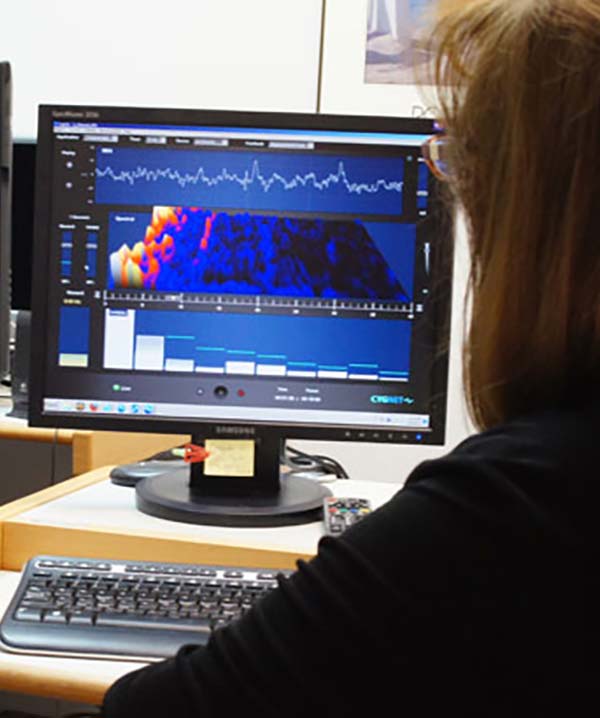
Patients often ask “how the computer says” they’re doing. This belies a conceptual and practical misunderstanding of the process. With neurofeedback, we are not programming the brain or implanting external stimulation. Rather, we are allowing the patient to witness his own brain activity in real time via a modality that makes available live information not otherwise easily discernible. By observing its own activity, the brain naturally and automatically makes adaptive adjustments that move toward normalizing function.
The proof in the pudding is not the mathematical analytics of the computer filters, nor changes in the individual’s EEG morphology, but rather the improvements and benefits the patient experiences in his life and the relief of symptoms. That is the bottom line.
Most models of therapy and mental health interventions rely upon verbal interchange and conceptual understanding as a basis for gaining insight and changing behaviors. There is often a presumption that patients are locked into the constraints of early life experiences or faulty thinking that inhibit or prevent them from changing. While early experiences, traumas, and other negative events contribute to dysfunction, they are not necessarily causative. Nor is their resolution or liberation contingent upon understanding or revised thought processes.
There are many sources and causes of dysfunction, including medical illness, procedures, life events, foods, drugs, and lifestyles, as well as developmental aging processes—all propounded upon strong genetic influences. Little of this is wholly deterministic, so we should not throw in the towel, assume the die is cast, and settle for managing the dysfunction. On the other hand, it is unreasonable (and empirically demonstrable as ineffective) to think that changing cognitive thoughts and processes can sustainably override the underpinning causes of mental, emotional, and neurological distress. Much of contemporary therapy is based upon cognitive behavioral models in which the therapist guides the patient to reframe or think differently about the causes and effects of his symptoms, thereby minimizing the impact of negative emotions. If only this were true—but it’s not! The assumptions and practices of cognitive behavioral interventions are fundamentally flawed because they rely on mistaken notions of how we are wired and how the nervous and biochemical system function. Negative emotions arise primarily physiologically from the viscera through the gut and into the brain. The mind then responds to physiological phenomena and demands by creating a narrative that interprets what the body and brain are experiencing. Since we orient toward integration, we typically experience thoughts and feelings as seamlessly connected. In many ways, this can be adaptive, allowing us to adjust and make sense of experience, usually responding on the fly. But often, the brain gets stuck in a loop of traumatic memories and emotional perseveration that interferes with the fluid flow of state shift that relieves fight-or-flight and rigidity. The brain believes the powerful gut feelings and makes the best of it by putting an interpretive spin on the physiological reality. The narrative is like the White House Press Secretary whose job it is to announce and advocate the views and positions of the governing administration.
To intercept and modify dysfunctionally stuck internal processes through cognitive modification or beliefs is contrary to our biological nature and bound to be ineffective. Trying to change overpowering emotions by thinking differently is like putting on your shoes first and then your socks—it is backward!
However, thoughts and beliefs do tend to change in concert with the reformation of the brain’s control over self-regulatory functions. Thankfully, belief in the method is unnecessary for it to work. You don’t have to believe in antibiotics in order for them to work; they either will or they won’t. You simply need to take them on schedule. Conveniently then, minimal suspension of belief or skepticism paves the way for enough commitment to sit in the chair and train the brain, giving it the information and opportunity to develop better control.
Ironically, as the brain improves, its owner becomes more receptive to and capable of the understandings and insights that psychologists are so fond of disbursing. Insight and wisdom are highly desirable for productive and satisfying living. However, in the flagrant presence of a nervous system gone amok, they are often inaccessible and highly overrated.
I am fond of the saying, “You don’t have to be sick to get better.” Thus, while the practice of health care follows the medical illness and deficit model, helping people relieve distress, achieve goals, and live fuller and more rewarding lives also falls under the purview of mental health and other professional interventions. Whether I have diagnosable mental or personality conditions is a matter of who is looking and assessing (and certainly I’ve had my troubles in the past). The reality, though, is that my life and development as a well-adjusted, productive, compassionate, and relatable person have assuredly been facilitated and augmented by my own treatment with neurofeedback.
Embarking upon the decade of my seventies, I am a much better version of myself, due in large measure to the cumulative and enduring benefits of training my brain. I am calm and free from all but the rarest and most transitory flares of anxiety or low mood. My emotional resilience is robust, so the traumas of life that so easily and mercilessly intrude are countered with resilience, confidence, faith, and rapid recovery. I sleep really well and consistently maintain motivation, curiosity, zeal, and productivity. My connection with my body awareness has improved. Perhaps age, experience, medical issues, and a changing metabolism have moderated my habits, and this contributes mightily to sanguine health and outlook. I don’t smoke, use alcohol, or any recreational drugs or intoxicants. Importantly, my body and brain have reliable (and welcome) “shut off valves” that temper my overeating, excessive indulgence tendencies, and cravings for things that aren’t good for me. It’s not mind over matter, but rather “matter over mind.” I stop eating when I am full or satisfied, rather than allowing my oral behavior to be dictated by what’s desirable or available. I routinely eat less and enjoy it more. My brain and physiological control are much more in order because of neurofeedback. That makes life more interesting, enjoyable, and productive.
Most importantly, I am increasingly able to practice what I preach as a professional and personal mission: to live life on its own terms, rather than stress to force the universe to bend to my will! In practical terms, this means that I am more forgiving and more accepting of others. Compassion and empathy have become routine and tangible, easily available assets that help me relate and put other people ahead of me. I’m able to be in the present most of the time and enjoy the fulfillment and effortlessness of working hard while being “in the zone,” so that work is rewarding and feels good to my brain. I’m increasingly able to let things go—including not getting my way or the perpetrations that others foist upon me, intentionally or not.
In a world where survival depends largely on control, I have used neurofeedback personally and with thousands of patients to develop better self-control that leads to safer boundaries and improved control over the outcomes from our interactions with life.
The laws of the universe and the rhythms of life are recapitulated from infinitesimal organisms to cosmological happenings that exceed much observation and understanding. Human brain operations and timing mechanisms are microcosms of the rhythms and resonances of the universe. Nature has given us many capacities for self-healing when we become in tune with the laws and timings of nature. Neurofeedback is an evolving science that provides extraordinary and accessible harmony between individual brains and the universal rhythms and timing mechanisms that coordinate with and affect them.
It is remarkable how watching your inner neurological self can change life for the better—and reliably has done so for many.
— Mark Steinberg, PhD