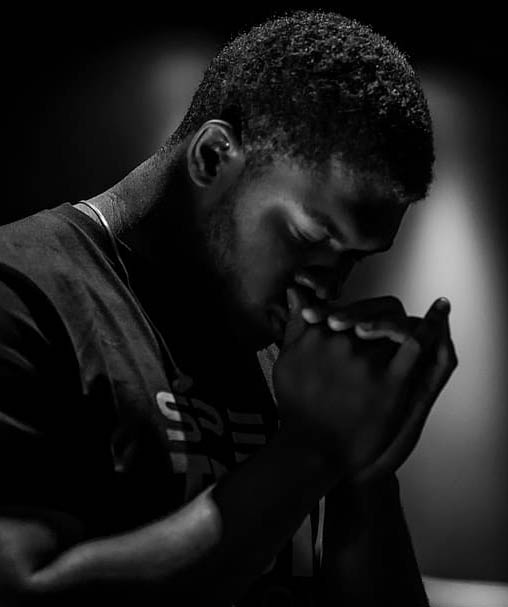
Lately, I’ve spent a lot of time reviewing the hardship and forced adaptation in recent times. Amidst my usual ruminating, grousing, and internal complaining, I’ve managed to reflect upon the good things I have—the gifts and blessings bestowed by God that I enjoy and use, knowing that they are not of my merit.
Interspersed with my worries about finances, health issues, my body aches and pains, relationship stresses and struggles, and the state of the world (going to hell in a handbasket), I realize and value the precious and unearned gifts God has given me. I share these in the hope that you will be inspired to reflect upon your own gifts. Among my gifts are:
I have been trained and given the tools to heal many people through my professional practice of psychology. It is with privilege, honor, and hard work that I’m able to provide care for and facilitate the healing of people of all ages and many walks of life. It’s joyous to interact with and serve the thousands of people whose lives have touched mine, as my gifts are used to lessen their anguish, ailments, and maladies.
As well, I have been very blessed to receive healing from others. I’ve sustained and enjoyed health, recovery, and vitality at many critical points and throughout my life. I’m fortunate to have been treated by very capable and caring professionals whose work has many times rescued and restored me. Under a watchful and merciful God, I have rebounded and continue to thrive.
Language has always come easy to me. Early on, I found that I had a gift for writing, talking, and understanding. Though I published my first book at the age of fifty, I’d been writing for decades. Essays, stories, songs, poems, scientific papers: I have a natural flair for vocabulary, articulation, and the explanation of complex information in comprehensible and accessible terms. I love writing. I often feel at my best and “in the zone” when I’m documenting what goes on in my head and my heart.
I love to listen. I’m comfortable with people, and years of training and experience enables me to quickly grasp what others are trying to say, their inner organization or confusion, and the emotions that may please or frustrate them. Language is a great way to connect and to validate the experiences, feelings, and perceptions of others.
The gift of writing and language is also valuable in that it can leave documents and a legacy of knowledge, retrievable and usable indefinitely. It’s a venue for understanding the past and present and for linking with the future.
Teaching is naturally intertwined with what I do: explaining things in writing and interpersonally, guiding others to understand, cope, and acquire new skills, providing models for people to emulate and practice. In the course of life roles—parenting, professional activity, and relationships—we are all teachers and learners. I’m fortunate to have formal training, classroom leadership (elementary, high school, and university teaching), as well as the daily one-to-one interactions with patients where opportunities to provide instruction and guidance are abundant.
As a business owner for many decades, I am responsible for administration, as well as direct care. I support and manage employees, tend to the paperwork and administrative needs of patients, and comply with governmental regulations in accord with operating a business. I supervise and teach employees and other professionals. I make many kinds of decisions, solve problems, and resolve conflicts where I can. There are many details required for a private practice that patients don’t notice or know about. All of these must be handled regularly and expeditiously for the business to thrive and endure. Following up and following the rules are constant responsibilities. It’s part of my service with which I patiently and faithfully comply.
The engine that drives my ability to heal, teach, and make good decisions is the gift of discernment and wisdom God gives me. Cognitive intelligence, experience, and street smarts all have their place. But without divine wisdom, I would be vulnerable to foolishness and would lack the keen discernment so vital to proper assessment and interpretation, practical problem-solving, and keen judgment and decisions.
Although discernment and wisdom are cumulative, they can easily be forgotten or abandoned when pride and self-sufficiency take over. Therefore, to nurture and use these gifts, I must continuously recognize in humility that they are God’s lifeline to my useful service.
I consider my achievements, intellect, and skills nothing in comparison to God’s sustenance and direction, and my constant reliance on his wisdom to chart my course and correct me.
To be loved—to know, feel, and receive love—and to be able to love indeed form the essence of life. This is fundamentally a spiritual matter. God reaches out to us, and we must be willing to accept his unconditional and unmerited love. It is out of that profound merciful and graceful gift that we truly develop the mature and selfless capacity to love and to give others what is given to us.
I am grateful to have a brain and nervous system that enable me to function with compassion and empathy. I’m grateful for a family of origin and upbringing that prepared and endowed me with the experience of and capacity to love. I’m grateful to have overcome the many traumas that scared me and temporarily blocked my path. And, I’m grateful for the healing arts and technologies that overcome trauma and negative emotions, so that our brains can unlock the shackles that inhibit compassion, empathy, and love.
The gift of receiving and giving love—recognizing love in many forms and abundance—lets me participate in life’s joys and sorrows with a fullness that makes it all worthwhile. God’s lovingness never leaves me. It opens possibilities to persevere, withstand trials, and find fulfillment I could otherwise never imagine.
Each of us is given gifts as a part of our nature and creation. Growing through life, it’s up to us to discover, develop, nurture, share, and value our individual and distinct gifts, talents, and advantages. It’s human nature to envy and covet what others have. But we must tame that nature, realizing and actualizing our special gifts. We must appreciate ourselves and harness our abilities to form a secure identity, along with contributions to others and a humble and realistic appraisal of where we fit in. Like the different parts of our physical human body, individual persons have specialized functions that belong to a community. The eyes, ears, hands, and feet must work together. They do not squabble or attempt to be what they are not. Similarly, we must develop and rejoice in our individual functions, as we contribute to the synergy and harmony of the common body of community—such as we are designed.
The longing to be like others and have what they have comprise drives and fantasies that should be tempered by gratitude, keen understanding, and confidence in what makes each of us important, precious, and special. Anything less is a shortchanged life, no matter what fortune, accomplishments, or recognition one may have.
What makes you special and valuable? Can you appreciate and use your strengths, while dwelling less on your faults and weaknesses? If you are downtrodden, ordinary, victimized, impoverished, or impaired, you are certainly not alone or in the minority. God nevertheless gave you blessings, gifts, hardships, and thorns. You’ve probably spent a whole lot of time and effort resenting your portion and wishing you were more like others, had different gifts, and other fortunes.
I know what that’s like, because I’ve spent a lot of my energies fighting those battles. I’m an ordinary person who has been very blessed and gifted, and who has come a long way in understanding and appreciating that.
Perhaps my most valuable gift is my desire and ability to help you discover and nurture yours.
— Mark Steinberg, PhD