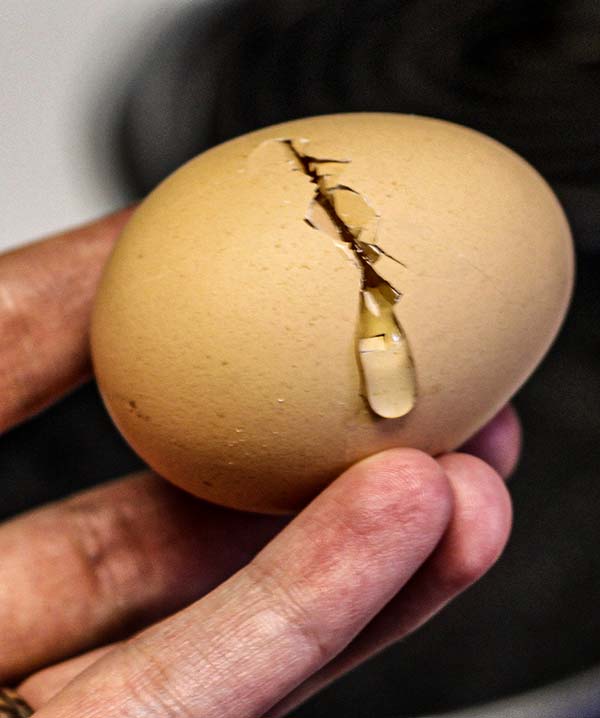
In a world where light dust settles on dark surfaces and dark dust settles on light surfaces, where pain and disappointment are prevalent, where imperfection reigns and things break down, how does one cope, adjust, and accept? What is the policy for living in a broken world where plans, promises, expectations, bodies, and things fall apart?
Thankfully, I am not an anxious person. Over time, I’ve learned to make peace with a universe that doesn’t bend to my wishes. This is a great help in avoiding distress when things don’t go as planned, hoped, or according to my desires and expectations. My brain is trained and adapted to restoring calm when pushed by external events or internal ruffles.
Though I am accepting of the inevitable reality of human brokenness, I have a harder time with the brokenness of things. This may sound strange (and I’m being candid in revealing a great embarrassment and weakness), but I get rattled when things stop working. I know, of course, that machines wear down, break, and need maintenance. Cars need fixing, bulbs need replacing, batteries need changing, teeth need professional care, and (shudders) software is routinely in need of intervention. Power lines go down, toilets become plugged, appliances go on the fritz, objects shatter or get lost, etc.
I am accustomed to these natural events, of course, and one would think to take them in stride. However, I tend to become uneasy when things stop working. I’m able to replace batteries, and I’m acclimated to relying on skilled help to repair the things I cannot (an exhaustive list). This shouldn’t be a big deal—but it is for me.
Two core attributes I’ve learned about myself are that I need and derive great comfort from security and sameness, and I am mechanically inept. I fix people, but have limited skills in fixing things.
Life reveals itself in cycles. Organisms arise in an ever-flowing progression of life and death. Biological reproduction accompanies natural patterns of geographic evolution and erosion on scales that are microcosmic and cosmological in numbers that are hard to apprehend. Nature recapitulates these cycles with inanimate patterns of wearing and breakdowns, thus resulting in the common consequences of needing to repair or replace things. This is the way of our world.
Though fixing, restoring, and replacing are natural phenomena of everyday life, this requires effort, time, and expense. It creates needs and summons people to specialize in meeting those needs. The natural tendency of things to break down produces discomfort, dysfunction, and deprivation—sometimes temporary and otherwise continuing.
Despite its normalcy and routine occurrence, when something suddenly stops working, inconvenience and stress follow. When the toilet gets plugged or the car breaks down, attention is coerced and one is forced to make adjustments.
Biological restoration is woven into the healing and regeneration of organisms. Of course, not everything can be restored; but, healing and recovery happen naturally and abundantly, thankfully facilitated by modern methods that blend with and augment nature.
Our bodies mount defenses to fight invading organisms. Bones and skin heal. Nowadays, replacing body parts has become increasingly routine, and these medical marvels prolong life, function, and well-being.
At a more abstract (but just as important level), psychological and emotional restoration involves the processes of healing trauma and broken relationships. The human brain and nervous system has tremendous and flexible capacity to renew calmness, equanimity, self-regulation, and trust. People can forgive and make up. Wounds can heal, traumas resolve, forgiveness liberates, and relationships can begin anew.
I like to say: “Some of my greatest conquests are those of reconciliation.”
For a handyman, repairing, patching up, and replacing are familiar actions. People at ease with fixing things understand, acclimate, and enjoy such restoration. Though many can be competent at physical repair and relationship repair, many others are distinctly uncomfortable and out of their element when restoration of emotional sanguinity is required.
Yet, restoration in relationships is also part of the natural order. Human compatibility and harmony requires work, sensitivity, adjustment, and compromise. Such efforts are not only necessary, but build resiliency, trust, and confidence. And, often, people problems need repeated fixing.
From early in development and throughout life, there is a pattern of restoration in human relationships that repeats a cycle: rupture, repair, attachment. A rift occurs between two people—fear ensues, isolation is felt, and trust is broken. Repair must occur, and then emotional attachment can resume and develop. This is the underlying dynamic of restoration.
Life is such that its transience renders some things (and relationships) beyond repair or recovery. Objects have a life span; they wear out and must be let go. People grow, separate, and eventually die. Sometimes, offenses and rifts are beyond restoration. Maturity and effectiveness bestow and demand the applicable differentiation between perseverance and knowing when and how to let go.
Loss is endemic to life, and we must accept and adjust.
The stories of the Old Testament and the revelations in the New Testament are replete with accounts of restoration: God’s generosity, compassion, and intervention in the foibles and suffering of mankind. Among the many stories in the Old Testament, one has only to read the accounts of Job and of Joseph to marvel in astonishment at God’s power, generosity, and faithfulness as exemplars of restoration. Noah and Jonah provide additional stellar estimony to God’s pattern of renewal.
The New Testament and the gospels offer fundamental assurance of the forgiveness and restoration God promises. God not only forgives our sins, but restores our relationship with him and promises a new life and body in the hereafter. He has created order in the universe that includes the cycles of life and nature.
Jesus’ resurrection is an ultimate example of God’s restoration and his power and promises for us.
The Bible refers to restoration at least one hundred and eight times. Note the following reassuring verses:
And the God of all grace, who called you to his eternal glory in Christ, after you have suffered a little while, will himself restore you and make you strong, firm, and steadfast. 1 Peter 5:10
Do not conform to the pattern of this world, but be transformed by the renewing of your mind. Then you will be able to test and approve what God’s will is—his good, pleasing, and perfect will. Romans 12:2
…and have put on the new self, which is being renewed in knowledge of the image of its Creator. Colossians 3:10
Therefore we do not lose heart. Though outwardly we are wasting away, yet inwardly we are being renewed day by day. 2 Corinthians 4:16
Though you have made me see troubles, many and bitter, you will restore my life again; from the depths of the earth, you will again bring me up. You will increase my honor and comfort me once more. Psalm 71:20-21
We can take comfort and reassurance that God follows through on his plan and pattern of restoration and renewal.
Adam and Eve once lived in bliss
Until they fell from foolhardiness
God is faithful despite the fall
Eventually, he restores it all.
Yet, despite spiritual promises, faith, and evidence, it’s hard to maintain poise, patience, and hope when things stop working. Life inevitably falls apart. Even though this is natural and expected, our doubt, fragile nature, and desperation make it hard to cope.
Perhaps this discussion of frustration with brokenness rings true with you. What do you need restored? How do you come by restoration? How well do you tolerate brokenness, and how easy is it to let go of what you can’t control?
From whom do you seek restoration and with what reliability? Do you struggle most with broken things, a broken body, or a broken spirit? What are your solutions?
Hopefully, you can seek and experience solace, comfort, assistance, satisfaction, and even joy in the processes of restoration that make you whole. You are not alone, even when it feels that way. You need others to help restore you, and you participate in and contribute to the restorative processes for yourself and others. Reflect upon the miracle as well as the ordinariness of restoration.
Aware of my own limitations and shortcomings and despite my knowledge and acceptance of the fact that things break and restoration is required, I ask myself: what is at the bottom of my frustration and impatience in the face of these things?
As best as I can determine, there is a core desperation inside me that defies any amount of reassurance, therapy, and repeated experience that things eventually work out. It may be a fear of abandonment, an utter helplessness, and a foundation of uncertainty about my security and significance that drives this recurring impatience and doubt when I’m left in need, longing for restoration. I want things to be working, just the way they were! The fragility and transience of the material world is inconvenient and psychologically disturbing. Moreover, the incidence of breakdown reminds me viscerally of how temporary everything is (including me) and how much I depend upon the aid of others through God’s provision.
When restoration occurs, however, things are back as they were, inconvenience and impatience quelled, I experience a resurgence of gratitude, renewed appreciation, and even joy. Restoration supplants the threat of fragility and frames the tendency to take things for granted in a new light. I am grateful for those who assist in the repairs and humbly thankful to the God who runs the universe for providing the recurrence and routine miracle of restoration. Though sometimes loss and destruction permit no recovery, our broken world allows for common and plentiful restoration.
The need for and regularity of restoration makes it interwoven with our daily life and the nature of our broken world. Along with the frustration of things breaking, the process of restoration breeds dependence, develops humility, and fosters interconnection among people who very much need each other. Brokenness and restoration are examples of how God makes good things happen out of desperation, frustration, and hopelessness.
As I reflect on these thoughts, my mouse battery is signaling low and the light above my keyboard is flickering. A rattling memory reminds me that the TV remote is not working. Oh, no! Here we go again…
— Mark Steinberg, PhD